

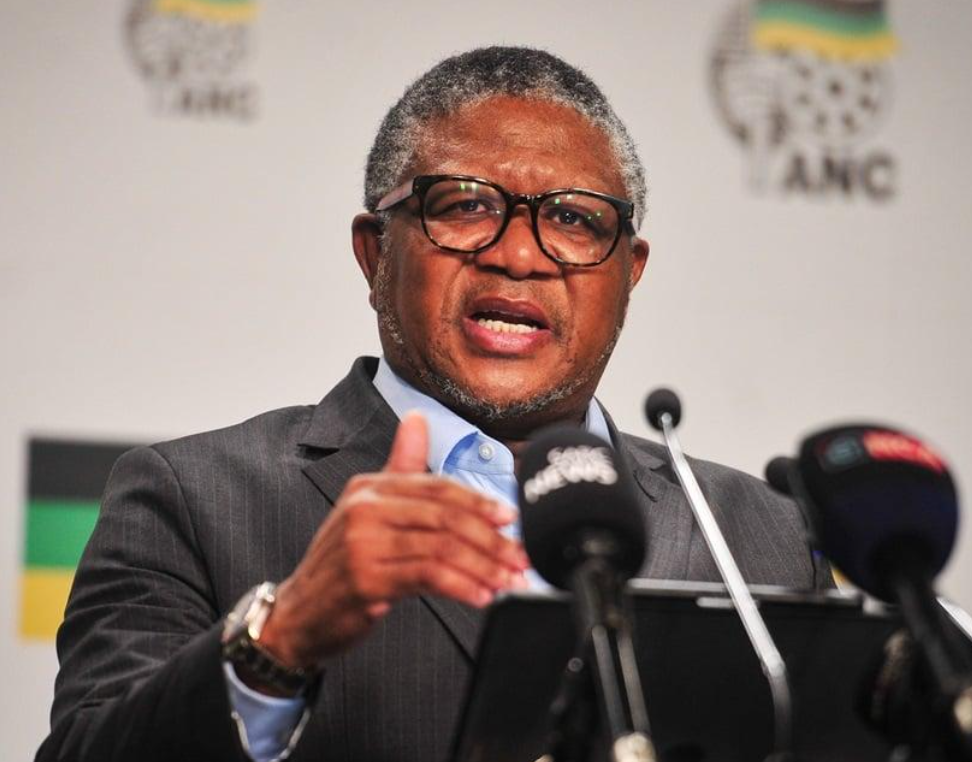
TSHWANE MAYOR ADMITS ACCOUNTABILITY

… WATER CRISIS DEEPENS
Chlorine supply failure under investigation as residents are warned to keep tap water out of their mouths
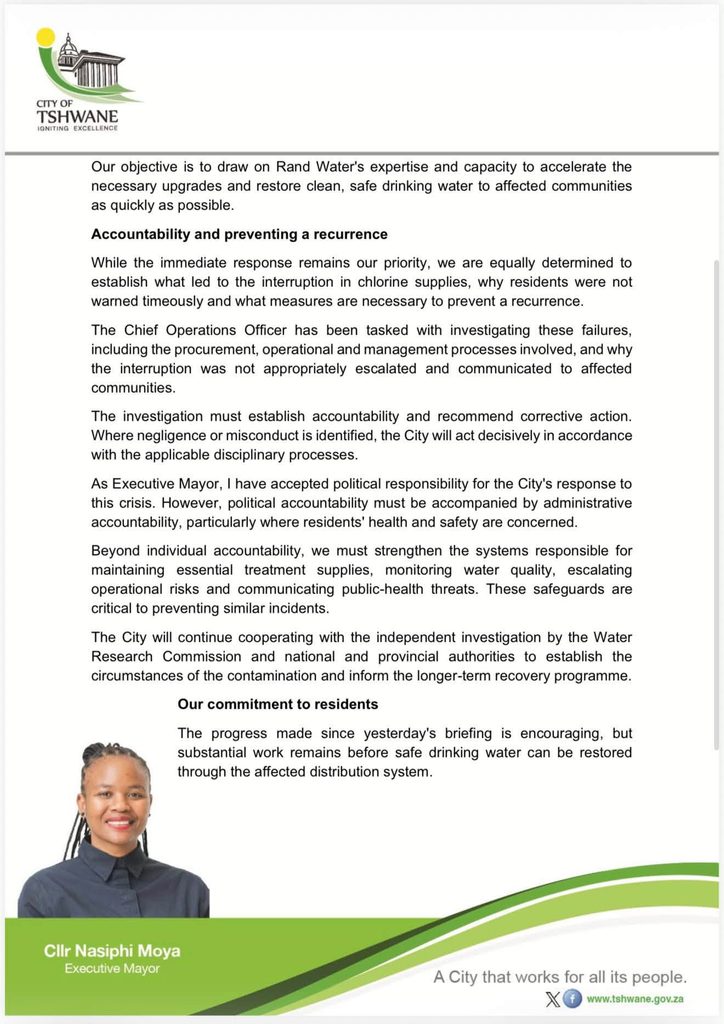
The City of Tshwane is under pressure to explain how a breakdown in chlorine supplies at the Bronkhorstspruit Water Treatment Works left communities facing a water safety crisis, with Executive Mayor Nasiphi Moya now promising accountability and possible disciplinary action against officials found to have failed in their duties.
In a development that raises serious questions about the City’s water management systems, Moya has acknowledged political responsibility for the municipality’s response while ordering an investigation into what went wrong, why the problem was not escalated properly and why affected residents were not warned in time.
The investigation will examine procurement, plant operations and management processes, with the City’s Chief Operations Officer tasked with getting to the bottom of the failures.
Moya has made it clear that officials will not simply walk away if negligence or misconduct is uncovered, saying disciplinary action will follow where wrongdoing is established.
But for residents who have been caught up in the crisis, the biggest question remains: how did a disruption involving a critical chemical used to make drinking water safe become a public-health emergency?
35 WATER TANKERS DEPLOYED AS COMMUNITIES WAIT!
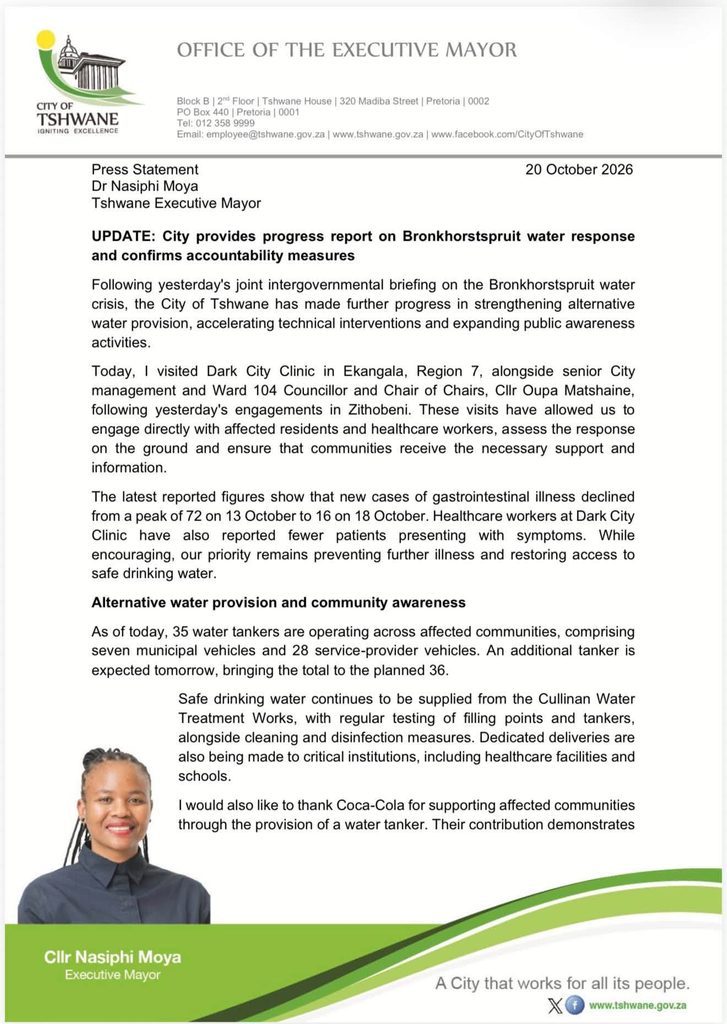
The City says it has deployed 35 water tankers to affected communities, comprising seven municipal vehicles and 28 operated by service providers. Another tanker was expected to increase the fleet to 36.
Water from the Cullinan Water Treatment Works is being used to supply safe drinking water, with hospitals, healthcare facilities and schools among the priorities.
Coca-Cola has also stepped in with a water tanker to help ease the pressure on affected communities.
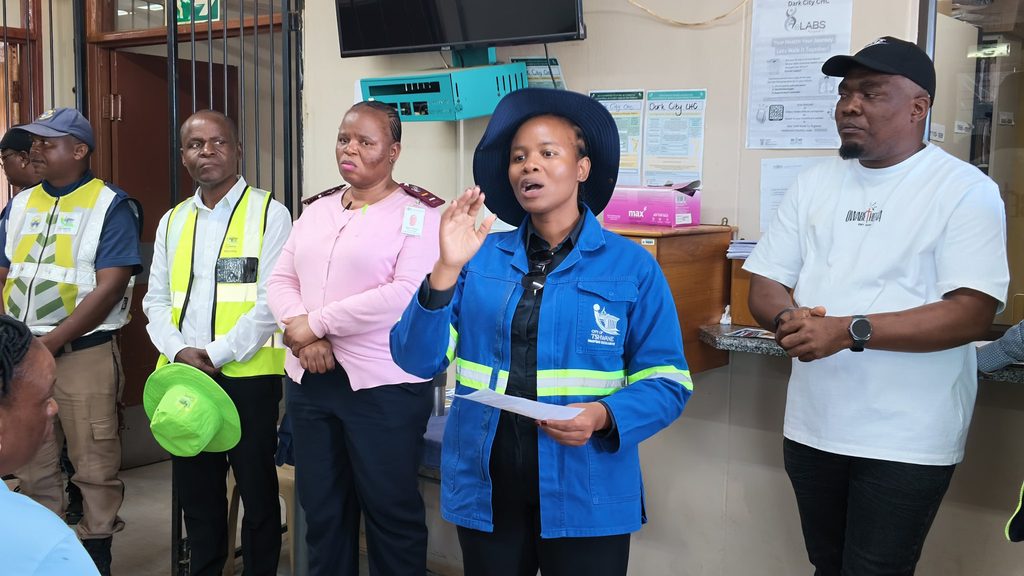
Moya visited Dark City Clinic in Ekangala on Tuesday, accompanied by senior municipal officials and Ward 104 councillor Oupa Matshaine, to assess the situation and engage with healthcare workers and residents.
The visits followed engagements in Zithobeni as the City attempts to improve communication and coordinate emergency assistance.
CASES OF THE SICK DROP, BUT DANGER REMAINS!
There is some relief on the health front, with reported new gastrointestinal illness cases falling from 72 on 13 October to 16 on 18 October.
However, the decline does not mean the danger is over.
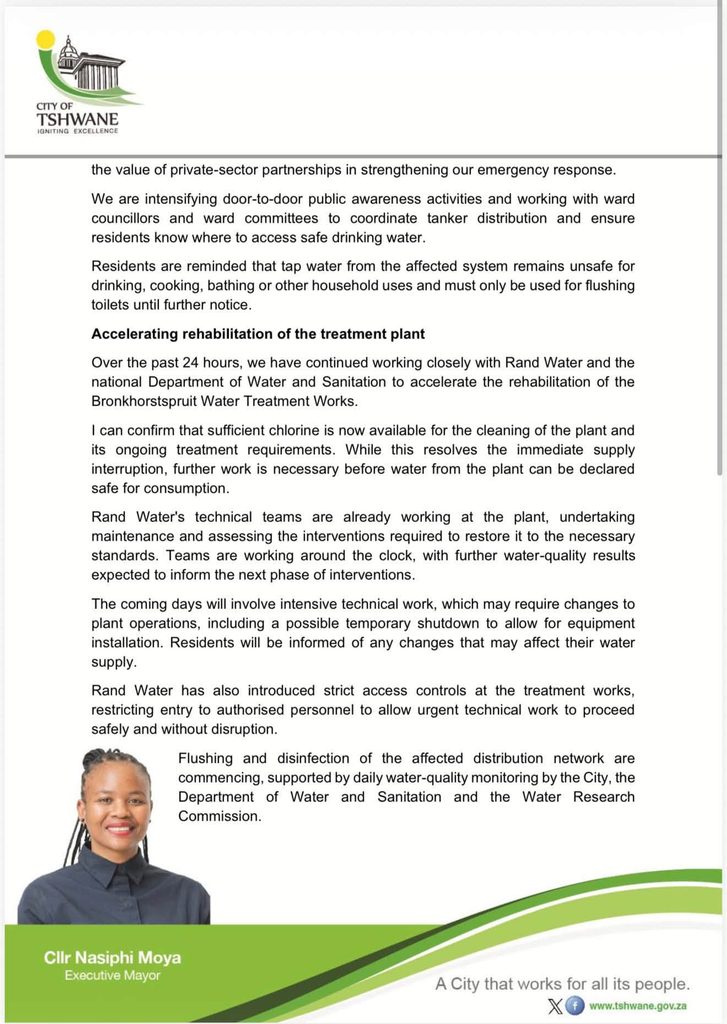
Residents have been warned that tap water from the affected distribution system remains unsafe for drinking, cooking, bathing and other household uses. Until authorities issue further notice, the water should only be used for flushing toilets.
The warning places the spotlight firmly on the urgent need to restore a safe and reliable water supply while preventing further illness.
Rand Water’s technical teams are working with the City and the national Department of Water and Sanitation to rehabilitate the Bronkhorstspruit Water Treatment Works.
The City says sufficient chlorine is now available to support the cleaning of the plant and its treatment requirements. However, residents cannot yet assume that the water is safe simply because the chemical supply has been restored.
Technical assessments, maintenance and water-quality testing must still be completed before the affected supply can be declared safe for consumption.
The affected distribution network is also undergoing flushing and disinfection, with daily water-quality monitoring being conducted by the relevant authorities.
Further technical work could require temporary changes to plant operations, including a possible shutdown to install equipment.
MAYOR PROMISES ANSWERS TO THE WATER CRISIS!
Moya says the crisis must result in more than an emergency repair operation. The City intends to strengthen the systems used to manage treatment chemicals, monitor water quality, report operational risks and alert communities when their health could be threatened.
The Water Research Commission is also involved in an independent investigation, alongside national and provincial authorities, to establish the circumstances surrounding the contamination and guide the longer-term recovery process.
While the Mayor has accepted political responsibility, the investigation will determine whether administrative failures contributed to the crisis and whether individuals should face disciplinary consequences.