



HOME AFFAIRS CHICKENS OUT, AS VIOLENCE ERUPTS IN SOUTH AFRICA
By Akasia Express News Reporter
At least 24 vehicles were torched as anti-immigration protests turn violent, shops are targeted and asylum reception centres face overwhelming queues.
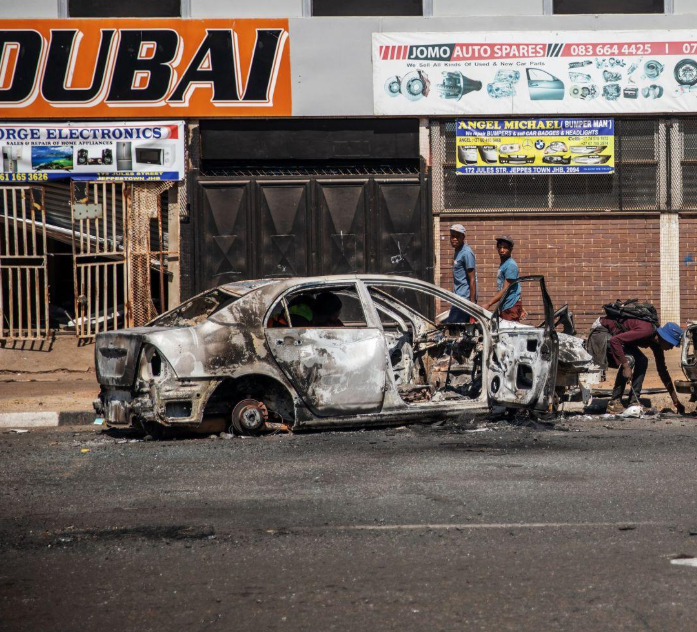
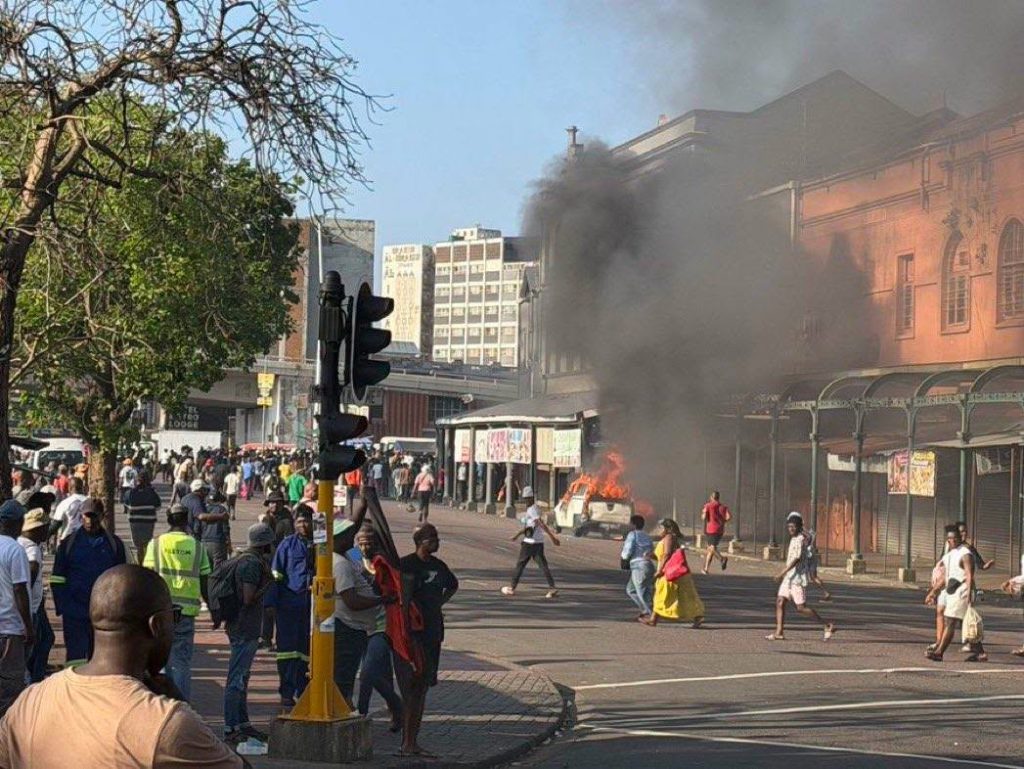
South Africa’s government moved to review the Department of Home Affairs’ asylum-processing directive on Thursday, 8 October 2026, as anger over a Constitutional Court ruling erupted into violence in Soweto, Johannesburg, and Durban, KwaZulu-Natal, leaving vehicles burnt, businesses damaged and refugee reception operations under pressure.
The unrest exposed a deepening national dispute over immigration enforcement, access to the asylum system, economic opportunities and the government’s ability to manage the number of people seeking protection in South Africa.
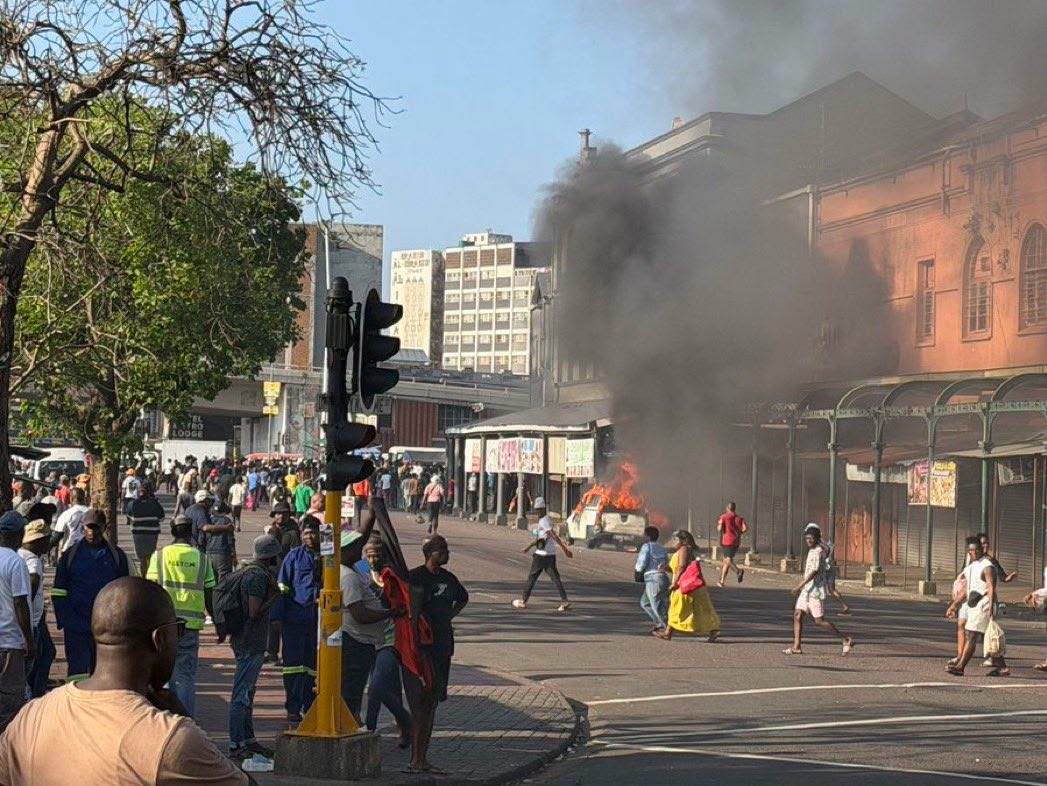
Reports indicated that at least 24 vehicles were set alight across Soweto and Durban, with 10 reported in Soweto and 14 in Durban. Shops owned by foreign nationals were also targeted, while police were deployed to areas where demonstrations deteriorated into violence.
The government, through its Inter-Ministerial Committee (IMC) on Migration, sought to address the growing confusion surrounding the court judgment and the subsequent instructions issued to refugee reception offices. Officials acknowledged that the offices had been overwhelmed by the influx of applicants.
WHAT TRIGGERED THURSDAY’S VIOLENCE?
At the centre of the controversy is a Constitutional Court judgment delivered on 7 July 2026 in the Scalabrini Centre of Cape Town and Another v Minister of Home Affairs and Others matter.
The judgment declared certain provisions of the Refugees Act unconstitutional because they created procedural barriers that prevented some people from accessing South Africa’s asylum determination system.
These barriers included circumstances in which people entered the country irregularly, did not possess an asylum transit visa or failed to report to a refugee reception office within the prescribed period.
Following the judgment, Home Affairs issued an operational directive requiring refugee reception offices to receive people who personally indicated that they intended to apply for asylum, including individuals who had entered South Africa unlawfully.
The directive, signed by acting director-general Thulani Mavuso on 28 September, instructed officials not to refuse applications solely because applicants lacked the required entry documentation or had missed the previous reporting deadline.
The change sparked public controversy, with some residents and anti-immigration groups arguing that it would weaken border enforcement and increase pressure on public services.
However, the court did not grant automatic refugee status, citizenship or permanent residence to foreign nationals. It required that asylum claims be allowed into the formal process so that eligibility could be assessed in accordance with the law.
SOWETO: DEMONSTRATION ESCALES INTO DESTRUCTION!
In Orlando West, Soweto, residents gathered outside Home Affairs offices to protest against the asylum-processing changes and demand action over irregular immigration.
What began as a demonstration escalated as tensions spread through the area. Vehicles were torched, shops operated by foreign nationals were targeted, and reports emerged of injuries during confrontations.
Johannesburg Metro Police spokesperson Xolani Fihla confirmed that authorities were responding to the unrest and warned motorists about active road closures. Initial reports put the number of vehicles set alight in Soweto at approximately eight, while subsequent reporting placed the total at about 10.
Residents expressed frustration over immigration enforcement and economic pressures, while allegations that protesters encountered gunfire added to tensions. Such allegations require independent verification and should not be treated as established fact.
The destruction of property and attacks on businesses raised renewed concerns about the safety of foreign nationals and the potential for further anti-migrant violence.
KWAZULY-NATAL: DURBAN ROCKED BY CLASHES!
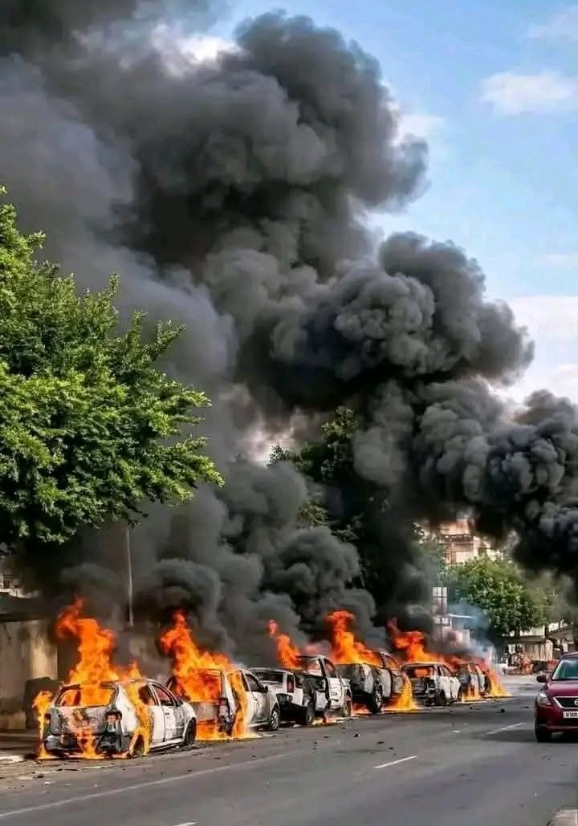
Durban also experienced serious unrest on Thursday as demonstrations linked to the asylum judgment escalated around the city’s refugee reception facilities and central business district.
Reports indicated that approximately 14 vehicles were torched in the city. Businesses were damaged, and some shops reportedly came under attack as police attempted to contain the situation.
KwaZulu-Natal police spokesperson Colonel Robert Netshiunda said three foreign nationals had been arrested in connection with an alleged assault on a protester. The circumstances surrounding the incident were reported as a possible trigger for the violence.
Public-order police were deployed as tensions intensified. The incidents highlighted the risks facing both local residents and foreign nationals when protests over immigration develop into intimidation, assault and destruction of property.
Authorities face the difficult task of protecting the right to peaceful protest while preventing criminal acts, including arson, looting and attacks on people because of their nationality.
HOME AFFAIRS QUEUES EXPOSE PRESSURE ON ASYLUM SYSTEM!
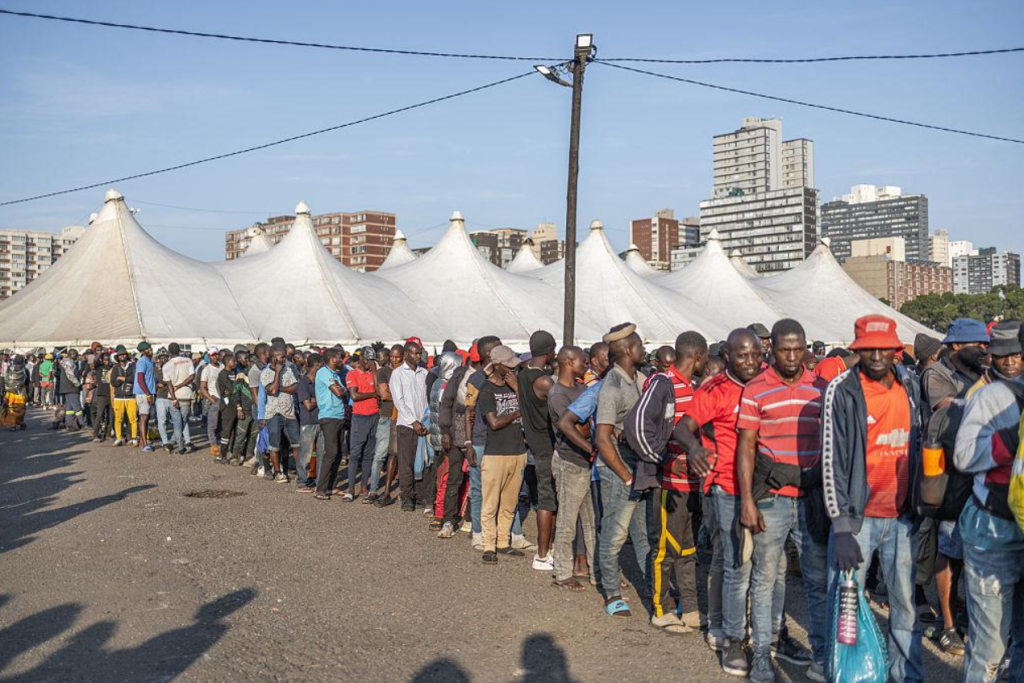
The unrest unfolded alongside long queues outside refugee reception offices, as people sought to submit asylum applications under the revised procedures.
The government acknowledged that refugee reception centres had been overwhelmed by the number of people arriving to apply. The situation raised questions about staffing, processing capacity, identity verification and the time required to assess claims.
The government has said it intends to strengthen operational capacity, improve the processing of applications and maintain appropriate identity checks.
The distinction between applying for asylum and being granted refugee status remains crucial. An application is not an automatic approval, and claims that do not meet the requirements of the Refugees Act can still be rejected through the established legal process.
At the same time, people who may genuinely face persecution, conflict or serious harm must be afforded access to a lawful assessment of their claims.
UNDER PRESSURE HOME AFFAIRS WITHDRAWS ASYLUM DIRECTIVE!
On Friday morning, Home Affairs withdrew the directive governing the intake of asylum-seeker applications, following days of mounting pressure on refugee reception offices and violence reported in Soweto and KwaZulu-Natal.
In an official statement issued on Friday, 9 October 2026, the department confirmed that its Director-General had withdrawn the directive issued on 28 September following the Constitutional Court’s judgment of 7 July in the Scalabrini Centre of Cape Town matter.
The department said the directive was originally intended as an operational measure to help implement the court’s order. According to the statement, it was issued without reference to, or the knowledge of, the Minister of Home Affairs or any other political office-bearer.
Home Affairs rejected allegations that the directive was politically motivated, describing such claims as categorically untrue. The department explained that the directive arose from a Constitutional Court case that it had opposed.
RECEPTION OFFICE OVERWHELMED WITHIN DAYS!
The department acknowledged that the immediate implementation of the judgment had serious consequences that officials had not anticipated from the court order.
According to Home Affairs, refugee reception offices were overwhelmed within days of the directive being issued. The department also said its officials had been placed at risk and that serious threats to public safety and order had emerged.
The withdrawal comes amid heightened tensions over asylum processing and anti-immigration protests, with vehicles reportedly torched and businesses targeted in Soweto and Durban, KwaZulu-Natal.
Although the government has now withdrawn the operational directive, the department has reaffirmed its commitment to complying with the Constitutional Court’s order.
NEW OPERATIONAL APPROACH TO BE DEVELOPED!
Home Affairs said it would begin a fresh process to determine the most appropriate operational approach to implementing the judgment.
The department stressed its respect for the judiciary and the rule of law, while committing itself to finding a method of compliance that is operationally appropriate and sustainable.
The statement does not specify when a replacement directive will be issued or what procedures refugee reception offices must follow in the interim. Those details will be important for asylum seekers, reception-centre officials and members of the public seeking clarity about the next steps.
The withdrawal therefore marks a significant development in the dispute, but it does not, by itself, resolve the broader questions surrounding asylum processing, immigration enforcement and the capacity of South Africa’s refugee reception system.
GOVERNMET’S RESPONSE: LAW, ORDER AND PUBLIC REASSURANCE!
The Inter-Ministerial Committee on Migration said government respected the Constitutional Court’s decision and was working to manage the operational challenges arising from its implementation.
Officials acknowledged concerns about long queues and the pressure on refugee reception centres, while emphasising that the asylum process must operate within the law.
The government is also under pressure to demonstrate that border management, identity checks and the assessment of asylum applications can be strengthened without unlawfully excluding people who may qualify for protection.
Police, meanwhile, have the immediate responsibility of restoring order, investigating the burning of vehicles and attacks on businesses, and protecting people at risk.
The number of arrests and the full extent of injuries and property damage should be confirmed through updated police statements as investigations continue.
NATIONAL DEBATE WITH SERIOUS CONSEQUENCES!
Thursday’s violence has brought South Africa’s immigration debate into sharp focus. Residents’ concerns about jobs, public services, crime and border enforcement require serious engagement from government, but criminal attacks on people and businesses cannot be justified as a means of expressing those concerns.
Foreign nationals, including asylum seekers, are also entitled to protection under the law. Their nationality or immigration status does not give anyone the right to assault them, threaten them or destroy their property.
The immediate challenge is to prevent further violence while ensuring that the asylum system operates in line with the law and that the public receives accurate information about the court ruling.
For government, the task is twofold: restore confidence in immigration administration and demonstrate that the country’s laws can be enforced without compromising constitutional obligations.