


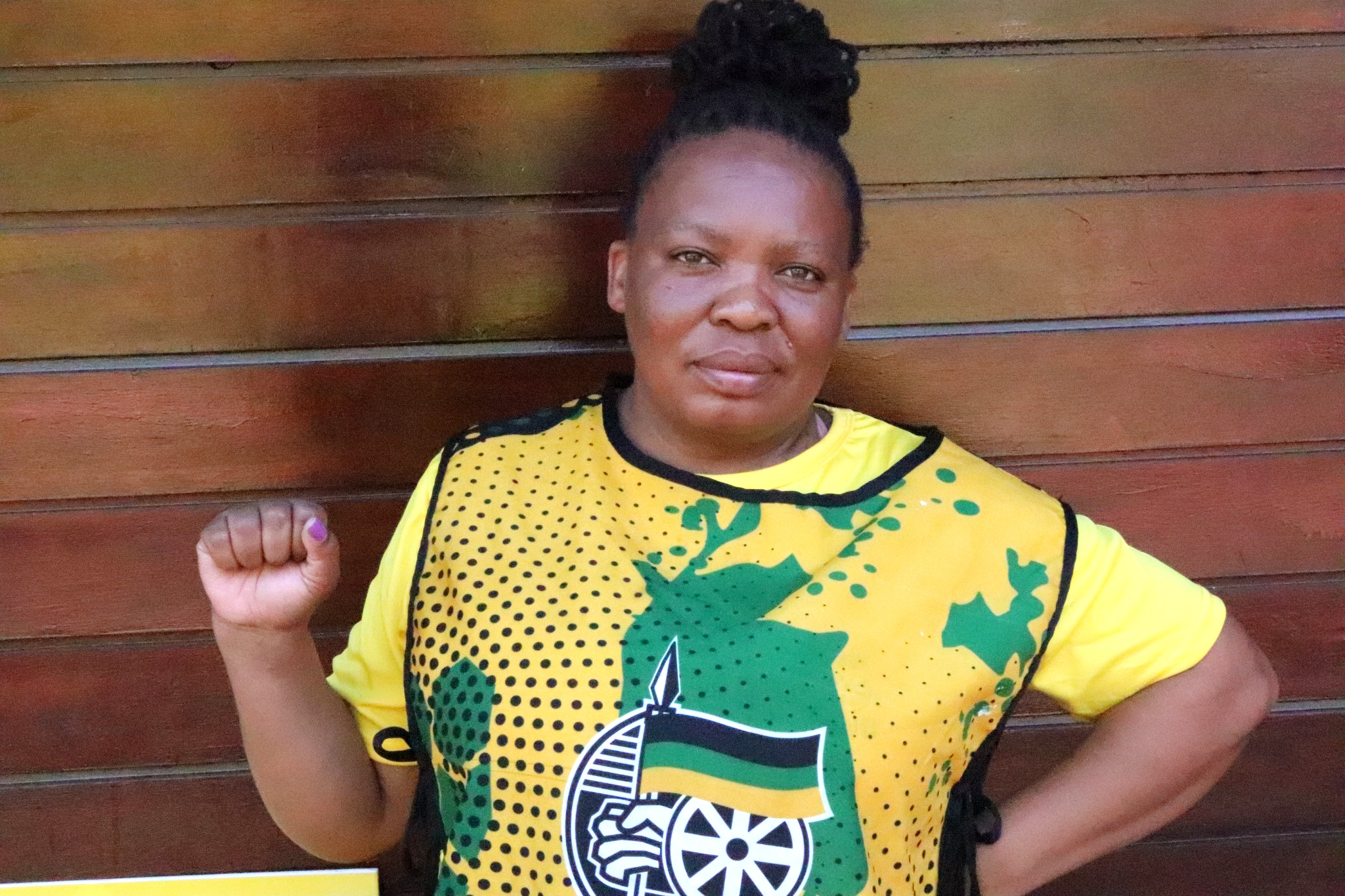


‘ONE LOAF PER FAMILY’ CAMPAIGN – ANC DISTANCES ITSELF FROM INITIATIVE!

The African National Congress has distanced itself from a controversial “one loaf per family” bread distribution initiative associated with Deputy Minister Bernice Swarts after a video of the campaign circulated widely on social media.
The footage shows volunteers handing out loaves of bread to residents while invoking the ANC’s name and slogans. The initiative was reportedly promoted by Swarts during a community outreach effort in her ward, where she argued that traditional campaign methods such as distributing party T-shirts no longer resonate with struggling communities.
According to those present, Swarts suggested that political campaigns should focus on addressing basic needs rather than symbolic gestures.
“People cannot cook T-shirts. They need water and bread,” she could be heard telling members in another video that went viral, highlighting the growing cost-of-living pressures facing many South African households.
However, the incident quickly sparked national debate after the video went viral online, prompting criticism from civic organisations and political commentators who accused the initiative of reducing voters to recipients of short-term handouts.
In response, ANC spokesperson Mahlengi Bhengu clarified that the bread distribution was not authorised by any official party structure.
“The images circulating on social media create the false impression that this was part of an official ANC programme or campaign,” Bhengu said.
“We want to make it clear that this activity was not authorised by any ANC structure.”
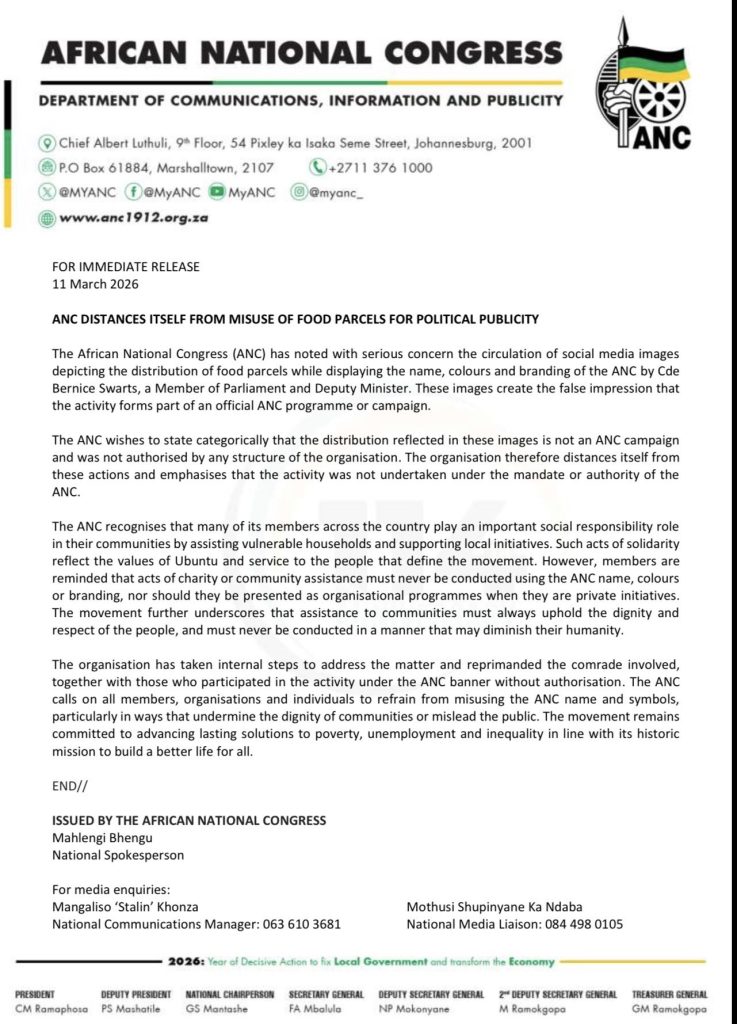
The party emphasised that while individual members are free to assist vulnerable communities, such initiatives must not be carried out under the ANC name or branding without proper approval.
The controversy comes at a politically sensitive time, with political parties preparing for the upcoming local government elections.
Civic organisation South African National Civic Organisation also criticised the bread handout, arguing that election campaigns should focus on long-term solutions to poverty rather than symbolic acts.
SANCO leaders warned that communities in Gauteng continue to face serious challenges including unemployment, lack of reliable water and electricity supply, housing shortages and rising food prices.
“These are the real issues that political parties should be addressing,” the organisation said, adding that voters should not be reduced to recipients of temporary handouts.
The debate has also highlighted the deepening economic pressures facing South African households. With food prices continuing to rise and unemployment remaining stubbornly high, many families are struggling to afford basic items such as bread.
Political analysts say the viral bread distribution reflects a growing tension in South African politics between symbolic campaign tactics and the urgent socio-economic needs of communities.
Swarts, who serves as Deputy Minister of Forestry, Fisheries and the Environment, has previously been involved in national development initiatives such as environmental programmes and community-based projects.
But the bread handout incident has shifted public attention to the broader question of how political leaders should engage communities during campaign periods.
For the ANC, the challenge now is managing the political fallout while reinforcing its message that party-branded initiatives must follow official structures.
For many South Africans watching the controversy unfold online, however, the debate has raised a deeper question: whether political campaigns should offer symbolic support — or real solutions to the daily struggles faced by ordinary citizens.