



DOLFYN STREET RESIDENTS LEFT TO PICK UP THE PIECES AFTER WATER REPAIRS!
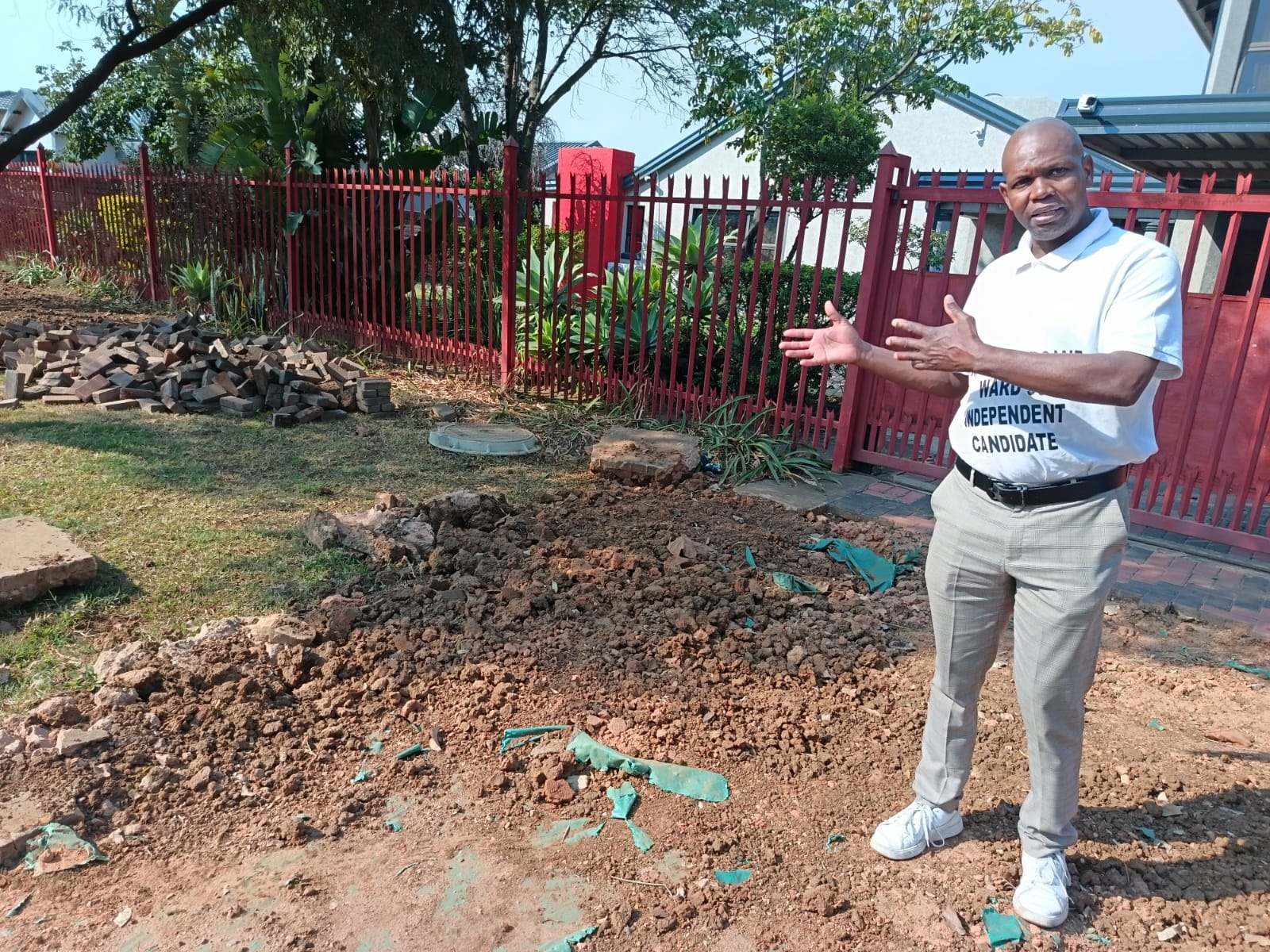
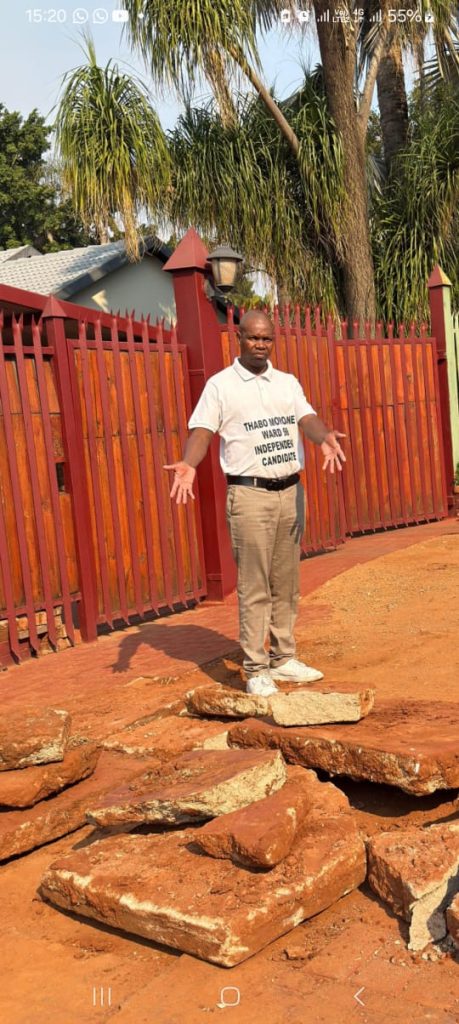


Residents of Dolfyn Street in Theresapark have been left to deal with a growing mess outside their homes following underground water-leak repairs that have disrupted pavements and driveways for months.
What started as a City of Tshwane municipal water infrastructure intervention has left some Ward 98 residents struggling to access their own properties, with sections of paving removed, trenches left poorly restored and paving bricks placed back upside down, if done at all.
Residents say the situation has become particularly frustrating because more than a month has passed since the repair work was completed, yet the affected areas have not been properly reinstated.
Some residents have now been forced to consider repairing their own driveways and pathways, despite the disruption having been caused by municipal infrastructure work.
The problem has also raised questions about who is responsible for restoring pavements after Municipal projects.
One resident within Ward 98 who refused to be named, said he’s saving money to have his paving reinstated as he has no confidence in the City and its councillors.
“We will report this mess and be thrown with reference numbers, which does very little to assist. We are on our own and we’d need to look after ourselves,” said the resident.
While the City of Tshwane may argue that the pavements outside residential properties are municipal land and that improvements such as paving, concrete slabs and landscaping are undertaken by residents at their own risk, residents say this should not mean they are simply abandoned after Municipal construction work.
For homeowners, the pavement outside their properties is more than just a strip of land, but provides access to their homes, garages, driveways and contributes to the safety and appearance of the neighbourhood.
RESIDENTS QUESTION LACK OF COMMUNICATION
Ward 98 independent councillor candidate Thabo Moroane says the disruption has been going on for considerably longer than residents initially expected.
“It’s now over three months since the lives of residents of Theresapark, Dolfyn Street, changed after the bulk water reticulation project started, which residents were not informed about,” Moroane said.
According to Moroane, paving was removed from residents’ driveways during the work and was never properly restored.
He says he is currently dealing with four references relating to the restoration of paving, three from Theresapark and one from Ninapark, where residents are seeking intervention from the City.
The issue, according to Moroane, goes beyond the physical damage left behind by the project and raises concerns about the process followed before and during municipal infrastructure projects.
“When a project comes to a community, the councillor must convene a meeting to inform the community about the projects, oversee the appointment of a steering committee, budget, duration of the projects and job opportunities for locals,” he said.
Ward 98 Councillor Mickey van der Westhuizen, argues that the damage Moroane refers to in Dolfyn Street was not caused by the Rand Water contractor.
“The affected area was disturbed during a City of Tshwane water-leak repair, and the responsibility for reinstating that area therefore rests with the City and the relevant service provider responsible for reinstatement after municipal repairs,” said van der Westhuizen.
“If residents believe that the City has failed to return and repair or reinstate an area damaged during municipal work, the correct process is to report the matter through the City’s official municipal channels, obtain a reference number and forward that reference to me. I can then escalate the matter and continue following up with the responsible department.
“Residents should also be aware that this reinstatement service is currently performed through contracted service providers and that there is a significant backlog. That does not remove the City’s responsibility to repair what was damaged, but it can unfortunately affect turnaround times.”

LOCAL YOUTH JOB OPPORTUNITIES UNDER SCRUTINY!
The project has also reportedly caused frustration among young people in the area, particularly over employment opportunities associated with Municipal projects.
Moroane says local youth watched workers who were allegedly not from the ward being employed while young people from the community remained without work.
“Sadly, that did not happen. The locals’ youth saw labourers not from the ward working while they were languishing on the street corners,” he said.
But van der Westhuizen responds that “there is a clear difference between a planned capital project and operational maintenance, or emergency work, such as repairing an underground water leak”.
He says not every water repair requires the establishment of a project steering committee, a public meeting, a discussion about project budgets or the creation of local employment opportunities before officials may attend to the fault.
“For formal planned projects where public participation, ward structures or project steering arrangements are required, the appropriate municipal processes are followed and the councillor is involved through the relevant structures. The Office of the Speaker also plays an important role in ward committee functionality and public participation,” explained van der Westhuizen.
The concerns highlight the importance of communication between municipalities, councillors and communities when major infrastructure projects are undertaken.
But Moroane continues to argue that, residents need to know what work is being done, how long it is expected to take, what disruptions they can expect and who will be responsible for restoring affected properties and public areas once the work is completed.
PROJECT FINISHED, BUT PROBLEMS REMAIN
For residents of Dolfyn Street, the biggest concern now is what happens after the contractors leave.
With the project completed after numerous failed attempts, homeowners are left looking at damaged or uneven paving, trenches and access points that have not been properly reinstated.
Van der Westhuizen says he is fully prepared to be held accountable for the responsibilities that belong to him as the elected ward councillor.
“I will continue to represent residents, escalate complaints, facilitate communication with the City and push responsible departments to correct service-delivery failures,” he vows.
“What I will not accept is municipal administrative or contractor responsibilities being incorrectly attributed to the ward councillor for political purposes.
“We are entering an election period where many individuals are positioning themselves as prospective councillors. Political contestation is part of democracy, but it should be based on facts. My focus remains simple: where the City has caused damage, residents must report it, obtain a reference, send it to my office and I will escalate it until the responsible department attends to the matter.”
The situation has turned what was supposed to be an infrastructure improvement into an inconvenience for residents who now face the prospect of additional costs to restore their properties.
The City will ultimately need to address whether the affected areas were restored according to the required municipal standards and whether residents’ complaints have been properly logged and attended to.
For the residents of Dolfyn Street, the expectation is simple – once municipal work is completed, the affected areas should be left in a safe, usable and reasonable condition.
Until that happens, the scars left by the water repairs remain a daily reminder of a project that residents say they were never properly informed about in the first place.